
Air Conditioning Repair in the USA
Virginia Carolina HVAC handles Air Conditioning Repair by first confirming the exact fault in the outdoor condenser or indoor evaporator. Our technicians measure refrigerant pressures, check the temperature split across the coil, and test capacitor and contactor operation. These steps reveal whether a simple component swap will restore cooling or if deeper issues such as restricted airflow or failing compressor valves exist.
Homeowners can safely replace the air filter and confirm the thermostat setting before a visit. Once our technicians arrive they isolate power at the disconnect, recover any remaining refrigerant according to current standards, and document every reading. This approach keeps the system running through humid summers without unnecessary part changes. During air conditioning repair we inspect the reversing valve operation on heat pumps then see the Virginia Carolina HVAC homepage covering USA.
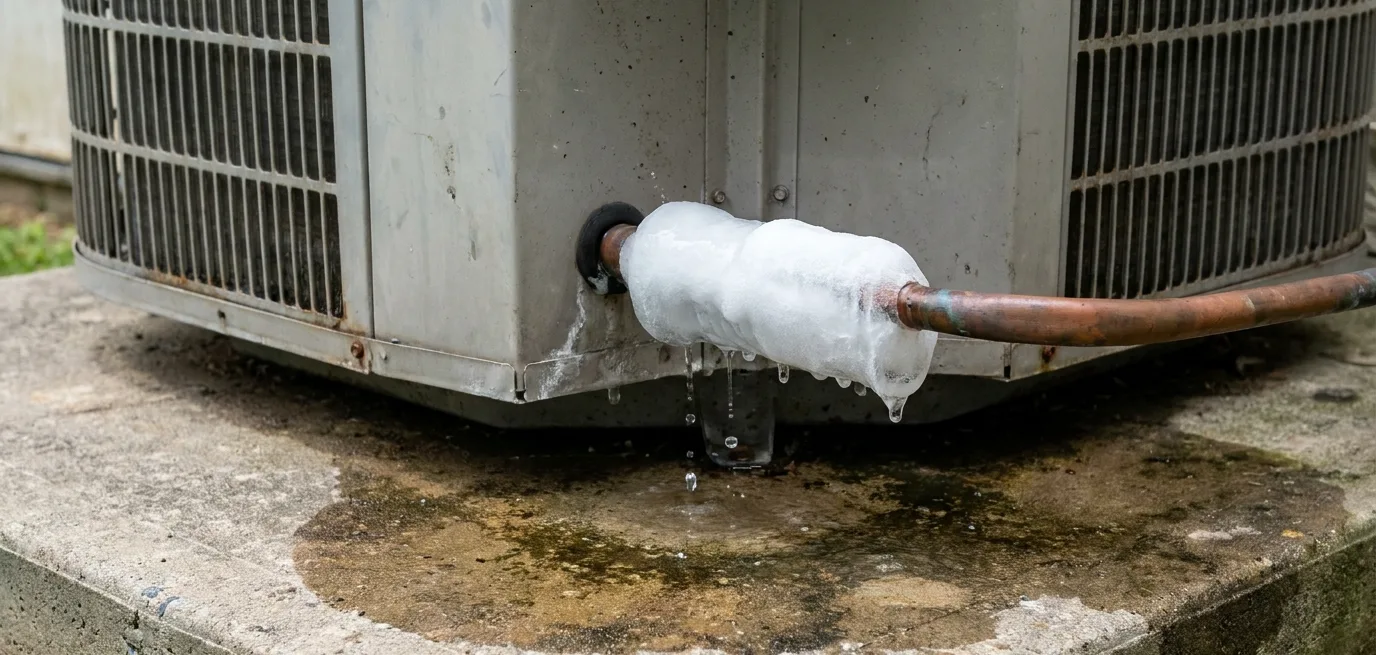
Warning Signs That Call for Air Conditioning Repair
- Airflow feels weak even on high fan speed settings.
- Room temperature stays several degrees above the thermostat setting.
- Ice forms on the suction line near the indoor coil.
- A burning smell appears when the outdoor unit starts.
- Short cycling occurs every few minutes without reaching setpoint.
Common Causes of Cooling Loss
A dirty condenser coil raises head pressure and forces the compressor to work harder until internal protection trips. Leaves, dust, and pollen reduce airflow across the fins and create hot spots that shorten equipment life. Our technicians clean these coils with the correct chemical solution and straighten bent fins to restore capacity.
Low refrigerant often points to a slow leak at the flare fittings or a pinhole in the evaporator. Technicians recover the remaining charge, pressure test the circuit, and add dye before recharging to the manufacturer specification printed on the data plate. They also verify superheat and subcooling to confirm the correct charge amount.
A failing run capacitor prevents the compressor or fan motor from reaching full speed. Technicians measure microfarad values against the nameplate rating and replace the capacitor with an exact match to avoid repeated starts that overheat windings.
Measurements Taken During Service
Technicians record suction and discharge pressures along with corresponding saturation temperatures to calculate superheat and subcooling. They also check voltage at the contactor and amperage draw on each leg of the compressor to spot developing motor problems before a complete failure occurs.
Temperature difference across the evaporator coil is measured with a calibrated thermometer. A split below seven degrees usually indicates low airflow or low charge, while an excessive split points to dirty coils or a failing blower motor. These numbers guide the exact repair steps that follow.
Repair and Component Options
When the compressor has internal valve damage, replacement becomes the practical choice rather than repeated refrigerant top-offs. Technicians recover the old charge, braze in the new compressor with nitrogen flowing through the lines, and install a new liquid line drier to protect the system from moisture and debris.
Fan motors and contactors wear from constant starts in mild winters when heat pumps switch between modes. Replacing these parts restores reliable operation without replacing the entire condensing unit. All connections receive dielectric grease to reduce future corrosion at the terminals.
Parts and Homeowner Preparation Steps
Common stocked items include dual-run capacitors rated for the exact horsepower, OEM contactors with the correct coil voltage, and factory-specified TXV or piston metering devices. These components match the original equipment specifications to maintain efficiency and prevent nuisance trips.
Before technicians arrive, homeowners should clear at least two feet of space around the outdoor unit and note any recent changes in noise or performance. Turning the thermostat to off and switching the breaker to the off position protects both the technician and the equipment during diagnosis.
Air Conditioning Repair questions
What should I check before requesting Air Conditioning Repair?
Confirm the thermostat is set to cool and the fan switch is on auto. Replace the return air filter if it appears gray or clogged, and verify that the outdoor disconnect switch is in the on position. These steps often restore operation without a service call.
How do technicians locate a refrigerant leak?
They recover the remaining refrigerant, pressurize the circuit with nitrogen, and apply an electronic leak detector along every joint and coil. A fluorescent dye may be added during recharge so future leaks become visible under ultraviolet light without repeated pressure tests.
Can a capacitor failure damage the compressor?
Yes. A weak capacitor causes hard starts that overheat the motor windings. Technicians measure capacitance during every visit and replace the part before the compressor sustains damage that would require full replacement.
What parts are typically replaced during Air Conditioning Repair?
Capacitors, contactors, and fan motors are the most common replacements because they wear from repeated cycling. When a leak is found, the drier and any damaged tubing sections are replaced to keep the system dry and free of contaminants.
Request Air Conditioning Repair
Virginia Carolina HVAC restores cooling performance with precise diagnostics and correct parts matched to each system.