
Thermostat Repair in the USA
Virginia Carolina HVAC sends technicians to examine thermostat problems that prevent accurate temperature control. A thermostat directs the air conditioning or heat pump cycle, so a small fault in wiring or calibration quickly disrupts comfort. Our crews test voltage at the subbase, confirm proper anticipator settings and inspect connections for corrosion that forms in humid conditions. They also verify compatibility with existing equipment before any adjustment or part replacement.
Homeowners often notice uneven room temperatures or short cycling first. These symptoms point to a thermostat that no longer reads the air correctly or fails to send clear signals to the system. Virginia Carolina HVAC crews carry replacement models suited for heat pumps used in mild winters as well as conventional furnaces. They explain each measurement taken at the unit so the cause becomes clear before work begins. We test condensate pump operation at end of thermostat repair before directing to the Virginia Carolina HVAC homepage across USA.
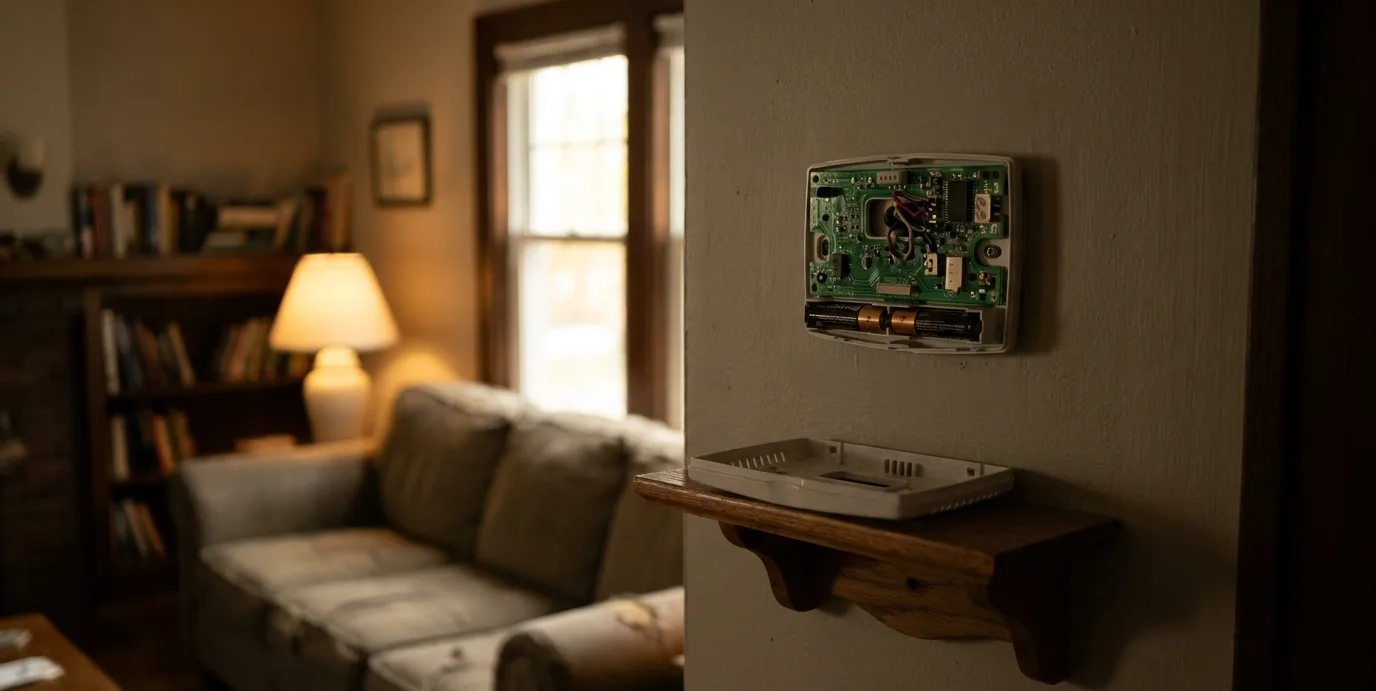
Indications a Thermostat Needs Attention
- Room temperature swings several degrees without adjustment.
- System runs briefly then shuts off repeatedly.
- Display shows no power or erratic readings.
- Heating or cooling fails to start on schedule.
- Fan continues after the set temperature is reached.
Measurements Taken at the Thermostat
Technicians first remove the cover and measure voltage between the red and common terminals with the system powered. They check for twenty-four volts and then test each control wire for continuity back to the air handler or furnace. A digital multimeter also confirms the sensor resistance matches the temperature shown on a separate thermometer placed nearby.
Next they examine the subbase screws for tightness and look for melted plastic or discoloration that indicates prior overheating. In heat pump systems they verify the reversing valve wire functions in both heating and cooling modes. Any deviation in these readings directs the next step without guesswork.
Frequent Causes of Control Failures
Loose or oxidized wire connections at the wall plate often interrupt the low-voltage signal that starts the compressor or blower. In homes with heat pumps, an incorrectly set dip switch for auxiliary heat can cause the thermostat to ignore outdoor temperature data. Dust inside the housing also interferes with the bimetal coil or electronic sensor.
Power surges from nearby lightning can damage the circuit board even when the unit appears to function. Older mercury models lose calibration after years of vibration from the wall. Virginia Carolina HVAC technicians identify these conditions by comparing actual room conditions against the displayed value before deciding on repair or replacement.
Options for Restoring Proper Operation
When wiring is sound but the mechanism is worn, technicians replace the head unit with a new model that accepts the same wire count. For systems using a heat pump they select a model with outdoor sensor terminals so auxiliary heat stages correctly during colder spells. The new unit mounts on the existing subbase after terminal screws are cleaned.
If the subbase itself shows damage or the wiring colors do not match standard diagrams, both the plate and wire ends are renewed. Technicians label each conductor before disconnection to avoid reversing heat and cool calls. After reinstallation they run the system through a full cycle to confirm the thermostat energizes the correct relays.
Actions Before the Technician Arrives
Homeowners can first replace the batteries if the display is blank or dim. They should also confirm the mode switch sits in heat or cool rather than off and that the fan setting is not locked on. Moving the setpoint five degrees and listening for the click of the relay helps verify the unit still attempts to call for equipment.
Checking the breaker that supplies the furnace or air handler rules out a wider power loss. Any error code shown on the screen should be noted and shared when the technician arrives. These steps narrow the issue to the control itself before tools are unpacked.
Thermostat Repair questions
Why does the thermostat display stay blank?
A blank display usually means the twenty-four volt supply has been interrupted or the batteries have drained. Technicians trace the transformer output and check the fuse on the furnace board before replacing the thermostat. In some cases a tripped breaker or loose wire at the air handler is the only repair needed.
Can a thermostat cause short cycling?
Yes. An anticipator set too low makes the unit shut off before the space reaches temperature, then restart within minutes. Technicians measure the current draw through the heat or cool circuit and adjust the anticipator or replace the control with an electronic model that uses time-based staging instead.
How do heat pumps affect thermostat choice?
Heat pumps require thermostats that manage the reversing valve and auxiliary heat stages. Virginia Carolina HVAC selects models with the correct number of stages and outdoor sensor inputs so the system switches to resistance heat only when outdoor conditions demand it during mild winters.
What parts are commonly replaced during repair?
Common replacements include the thermostat head, the subbase plate, and short lengths of thermostat wire when insulation is brittle. Technicians also carry new batteries and terminal screws. They match the replacement to the existing wire count so no additional conductors are pulled unless the original cable is damaged.
Schedule Thermostat Repair
Contact Virginia Carolina HVAC to have a technician inspect and correct thermostat operation on heat pump or furnace systems.