
Seasonal HVAC Tune-Ups in the USA
Virginia Carolina HVAC performs Seasonal HVAC Tune-Ups by measuring refrigerant pressures, supply and return air temperatures, and electrical amperage draws on compressors and blower motors. Technicians also inspect the condition of capacitors, contactors, and condensate drains while the system runs in both cooling and heating modes. These steps identify small changes in operation that can lead to larger failures when outdoor humidity rises or when temperatures drop overnight.
During a tune-up our technicians clean evaporator and condenser coils with non-acidic solutions and verify that the heat pump reversing valve shifts smoothly between modes. They adjust blower speeds to match duct static pressure readings and confirm that thermostat anticipators or sensors respond correctly to small temperature changes. Homeowners can first replace the air filter and clear debris from the outdoor unit before the visit so measurements reflect normal operating conditions. After completing seasonal hvac tune-ups our technicians explain thermostat calibration steps and point to the Virginia Carolina HVAC homepage in the USA.
Warning Signs Before a Tune-Up
- Airflow feels weaker than usual from supply vents during cooling.
- Ice forms on the suction line near the indoor coil after short run times.
- The outdoor unit makes a distinct click but does not switch to heat mode.
- Condensate water drips from the indoor unit cabinet instead of the drain line.
- Thermostat shows a two-degree difference between set point and actual room temperature.
Measurements Taken During Seasonal HVAC Tune-Ups
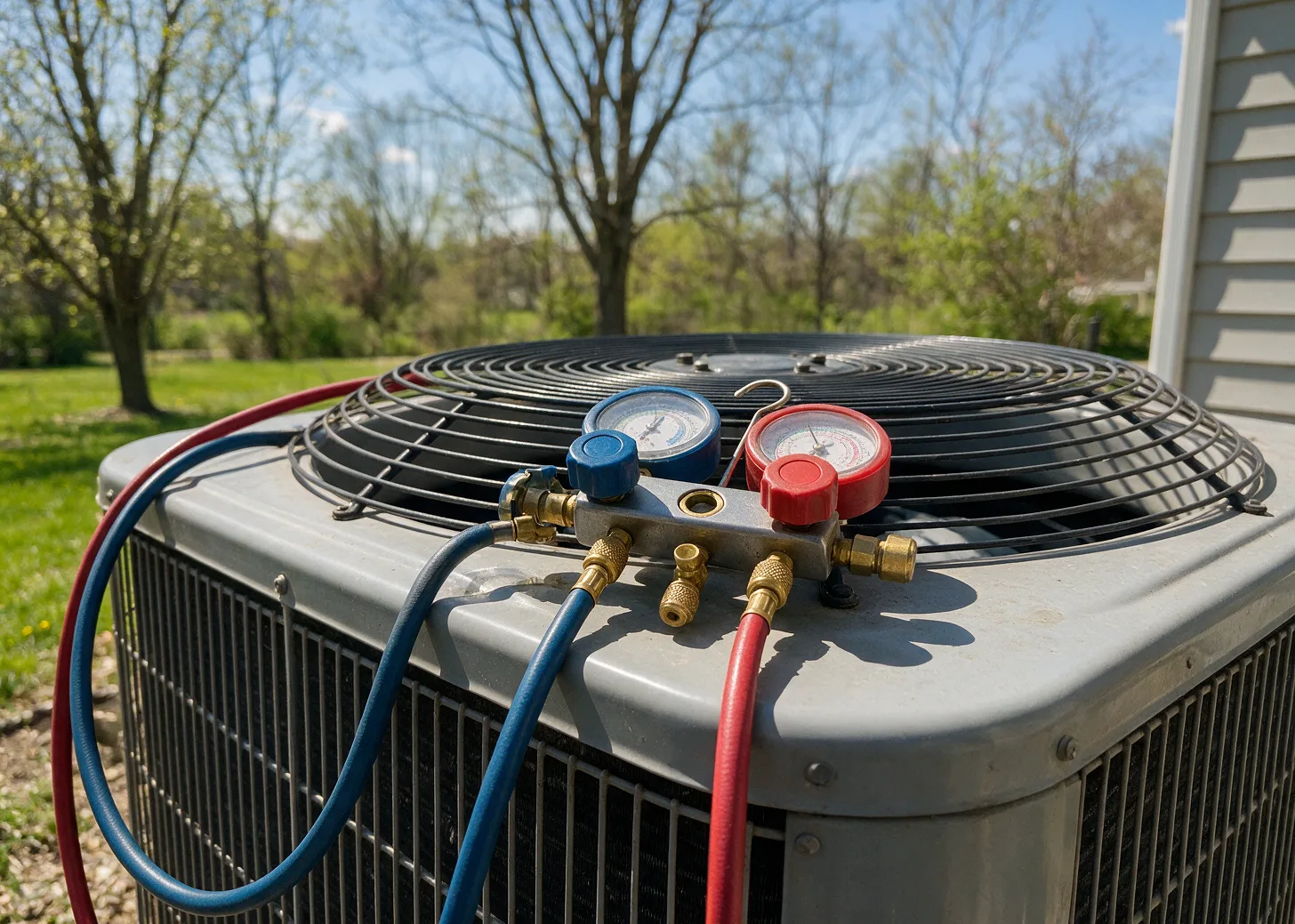
Our technicians connect gauges to read suction and discharge pressures while the compressor runs in cooling mode. They compare these values against the temperature of the air entering the outdoor coil to determine whether the refrigerant charge matches the manufacturer specification for the current conditions. Low suction pressure often points to restricted airflow across the evaporator rather than an actual leak.
They also measure the temperature split between supply and return air to confirm the evaporator is removing the expected amount of sensible heat. In heat pump mode the same split is checked after the reversing valve shifts. Any deviation outside normal ranges leads to further checks of the expansion device and outdoor fan motor speed.
Heat Pump Checks in Mild Winter Conditions
When outdoor temperatures remain above freezing, heat pumps continue to extract heat from the air but can lose efficiency if the outdoor coil collects frost. Technicians verify that the defrost control board initiates a cycle at the correct interval and that the auxiliary heat strips energize only when needed. They also inspect the condition of the crankcase heater so oil remains warm and does not mix with refrigerant during off periods.
The reversing valve solenoid is tested for proper voltage and mechanical movement. If the valve sticks partway, the system may deliver lukewarm air instead of full heating. Checking these components during Seasonal HVAC Tune-Ups prevents short cycling and keeps the system from running auxiliary heat longer than necessary.
Addressing Humidity Effects on Coils and Drains
High summer humidity increases the load on the evaporator coil as it removes both heat and moisture. Technicians clean the coil fins and confirm the drain pan slopes correctly so water does not stand and promote microbial growth. They also check the condensate pump if one is present and test its float switch to prevent overflow onto ceilings or floors.
Static pressure readings taken before and after the evaporator show whether the coil has become restricted by dirt or by a collapsed filter. Restoring proper airflow allows the system to reach its designed latent capacity without freezing the coil during long run times.
Parts Replaced and Adjustments Made on Site
Common items replaced during Seasonal HVAC Tune-Ups include run capacitors that have weakened, contactors whose points show pitting, and air filters that no longer maintain their original efficiency. Technicians also tighten electrical connections that have loosened from vibration and apply a protective coating to outdoor coil fins where corrosion has begun.
Blower wheel and motor assemblies are checked for balance and bearing noise. If the wheel has accumulated dirt that affects balance, it is cleaned rather than replaced unless the fins are damaged. These targeted replacements restore original performance without requiring full system replacement.
Seasonal HVAC Tune-Ups questions
How often should Seasonal HVAC Tune-Ups be scheduled?
Virginia Carolina HVAC recommends performing Seasonal HVAC Tune-Ups twice each year, once before the cooling season and once before the heating season. This timing allows technicians to verify refrigerant charge and coil condition when the system will face peak loads from humidity or overnight temperature drops.
What can a homeowner check before the technician arrives?
Replace the air filter with a new one of the correct size and MERV rating. Clear leaves and grass clippings from the outdoor unit so air can pass freely across the condenser coil. Note any unusual noises or temperature differences between rooms and write them down for the technician.
Will a tune-up include checking the heat pump reversing valve?
Yes. During Seasonal HVAC Tune-Ups the valve is energized in both modes while pressures and temperatures are recorded. The technician listens for the characteristic shift sound and confirms that the system delivers the expected temperature change after the valve moves.
Are duct static pressure readings part of the service?
Technicians measure total external static pressure and compare it to the equipment rating. Elevated readings often indicate dirty coils, closed dampers, or restricted returns. Correcting these issues improves airflow before the system enters its heaviest use period.
Schedule Seasonal HVAC Tune-Ups
Contact Virginia Carolina HVAC to arrange Seasonal HVAC Tune-Ups across the USA before seasonal load changes begin.