
Heat Pump Service in the USA
Virginia Carolina HVAC performs Heat Pump Service by first verifying thermostat operation and airflow across the indoor coil. Our technicians then measure suction and discharge pressures along with temperature differentials on both sides of the system. These steps identify whether the reversing valve is shifting correctly or if a defrost sensor has failed during shoulder seasons.
In regions with humid summers the outdoor coil can ice or collect heavy moisture that restricts heat transfer. Virginia Carolina HVAC addresses this during Heat Pump Service by clearing debris from the fins and confirming the condensate drain remains open. Mild winters often produce short run times that prevent proper oil return, so the crankcase heater is tested on every visit. When our crew arrives for heat pump service capacitor voltage check comes next so review the Virginia Carolina HVAC homepage in USA.
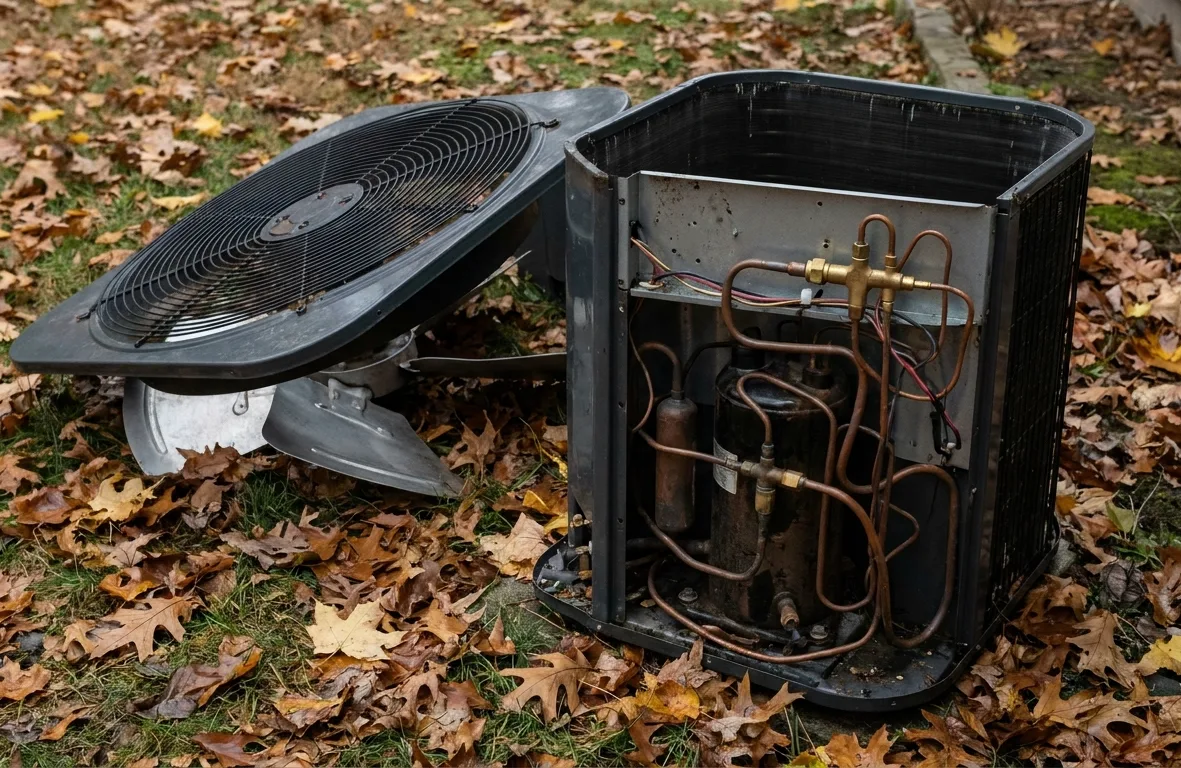
Warning Signs Heat Pump Performance Has Changed
- Air from vents feels lukewarm during heating cycles.
- Outdoor unit runs with frost that does not melt.
- Indoor humidity rises even while the system operates.
- Clicking or buzzing occurs when the reversing valve shifts.
- System short cycles and never reaches set temperature.
Components Checked During Heat Pump Service
Our technicians begin by recording entering and leaving air temperatures at the indoor unit to establish baseline performance. They next test capacitor values on both the compressor and fan motors because low capacitance prevents the reversing valve from receiving full voltage. The defrost control board is examined for proper time and temperature termination settings that prevent ice buildup on the outdoor coil during cool nights.
Refrigerant is recovered into a manifold gauge set so superheat and subcooling can be calculated against manufacturer targets. If the measured values fall outside range, the system is leak-checked with an electronic detector before any charge adjustment. Electrical connections at the contactor and low-voltage wiring are tightened to eliminate voltage drop that can damage the compressor over repeated cycles.
Common Causes of Heat Pump Issues
Extended operation in high humidity loads the outdoor coil with moisture that freezes when the unit switches to defrost. A faulty defrost sensor leaves the coil blocked, forcing the compressor to run longer and raising energy use. In mild winters the unit may satisfy the thermostat before the crankcase heater has time to boil off refrigerant that has migrated to the oil, thinning lubrication on startup.
Restricted airflow from a dirty filter or collapsed duct reduces the amount of heat the refrigerant can absorb or reject. This imbalance trips high or low pressure switches and shortens equipment life. Virginia Carolina HVAC also sees reversing valves that stick after sitting idle because the slide mechanism seizes without regular movement.
Repair and Component Replacement Choices
When the reversing valve sticks, the entire valve body is replaced because internal scoring prevents reliable shifting between heating and cooling. Capacitors that test below tolerance are swapped for new units matched to the motor nameplate amperage. If the defrost board fails to terminate, it is exchanged along with the sensor to restore the correct cycle timing.
Coil cleaning uses a non-acid foaming solution applied from the inside out so loosened debris exits the fins rather than being driven deeper. When leaks are located at flare fittings, the flare is remade with fresh tubing and torque is set to manufacturer specifications. Virginia Carolina HVAC stocks common OEM contactors and pressure switches so single-trip repairs can be completed without ordering parts.
Steps Homeowners Take Before Service Arrives
Replace the return air filter if it appears gray or loaded with dust so airflow can be restored immediately. Confirm the thermostat is set to heat or cool and the fan switch is in the on position rather than auto. Walk around the outdoor unit and remove any leaves, grass clippings or snow that block the coil face.
Listen for the outdoor fan motor running and note whether the compressor starts within thirty seconds of the thermostat call. Record any unusual sounds such as rattling or continuous humming. These observations allow our technicians to focus diagnostic time on the affected circuit once they arrive.
Heat Pump Service questions
How often should Heat Pump Service occur?
Virginia Carolina HVAC recommends one visit each spring and one each fall. The spring appointment verifies cooling capacity before humid weather arrives while the fall visit confirms defrost operation before temperatures drop. Between visits the homeowner changes filters monthly and keeps vegetation cleared from the outdoor unit.
What parts are commonly replaced on heat pumps?
Capacitors, contactors and defrost sensors fail most often because they operate every cycle. Reversing valves are replaced when internal leakage prevents mode changes. Virginia Carolina HVAC carries these items on the truck so most repairs finish during the first visit.
Why does the outdoor unit ice up in mild weather?
When humidity is high and temperatures hover near freezing the coil can accumulate frost. If the defrost sensor or board does not initiate a cycle the ice remains. Our technicians test the sensor resistance and board timing to restore automatic defrost.
Can low refrigerant be added without finding the leak?
No. Virginia Carolina HVAC recovers the charge, locates the leak with an electronic detector and repairs the joint before any refrigerant is returned to the system. Adding refrigerant without repair only delays the next failure.
Request Heat Pump Service
Virginia Carolina HVAC technicians measure pressures and temperatures to restore heat pump function across the USA.