
Duct Sealing in the USA
Virginia Carolina HVAC technicians begin Duct Sealing work by testing total duct leakage with a calibrated fan and pressure gauges. They record supply and return side pressures separately so homeowners understand which runs lose the most air. This measurement guides where mastic or aerosol sealant will be applied.
In humid summers the cooled air escaping from leaks raises indoor moisture levels while in mild winters heated air lost to unconditioned spaces increases energy use. Our crews explain these effects to the homeowner before any material is placed on the ducts. Before duct sealing begins we verify the heat exchanger for cracks and suggest viewing the Virginia Carolina HVAC homepage in USA.
Common Indicators of Leaking Ducts
- Rooms farthest from the air handler stay warmer or cooler than the thermostat setting
- Dust collects on surfaces near supply registers even after filter changes
- High utility bills appear without changes in thermostat settings or occupancy
- Musty odors travel through the system when the blower starts
- Visible gaps or loose connections at duct joints in accessible areas
Inspection Steps Our Technicians Follow
Technicians first examine accessible duct runs for disconnected sections or deteriorated tape. They measure static pressure before and after the air handler to determine whether leaks are restricting airflow. A smoke pencil or infrared camera reveals escaping air at joints and seams.
Next they test for pressure imbalances between rooms using a manometer. This step shows whether return leaks pull air from attics or crawl spaces. The data collected helps decide between surface sealing with mastic or aerosol application inside the ducts.
Materials Used for Permanent Repairs
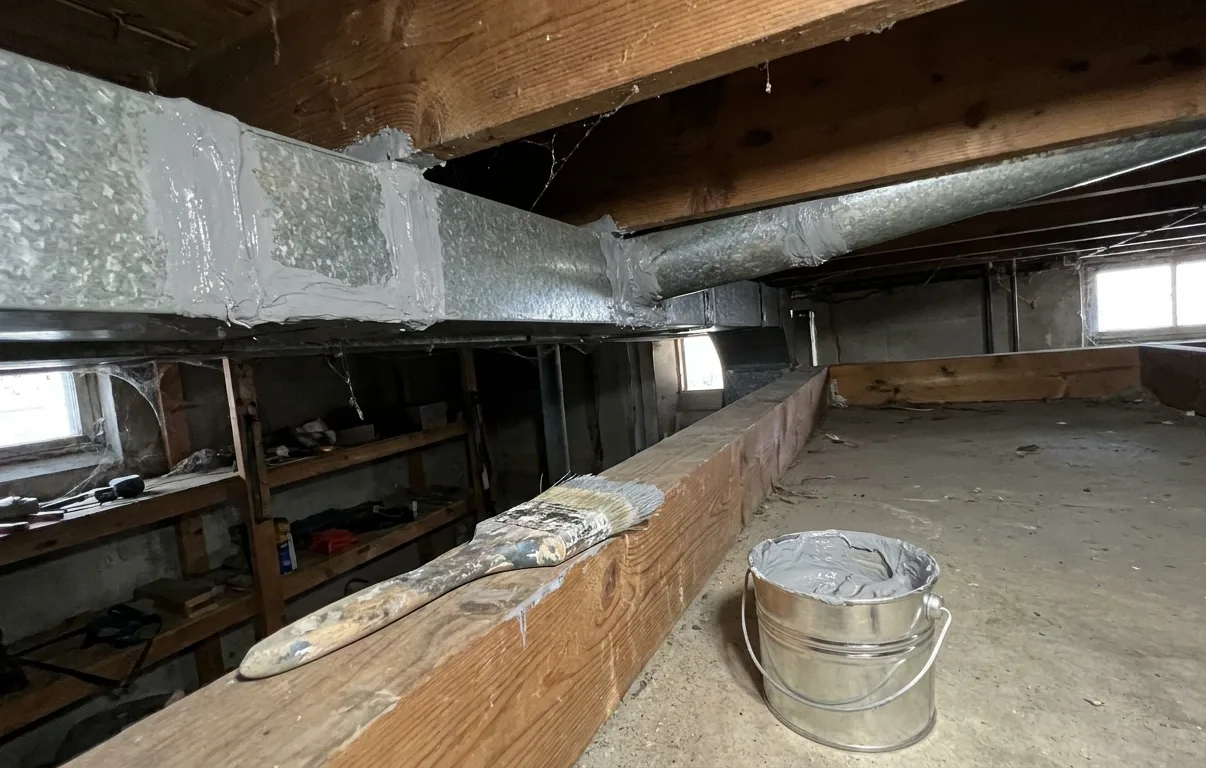
Mastic sealant combined with fiberglass mesh tape creates a durable bond at accessible joints. Metal tape rated for HVAC use replaces ordinary duct tape that fails over time. In long or concealed runs aerosol sealant is introduced through the register and carried by the blower to coat interior surfaces.
Our technicians avoid spray foam on ducts because it can restrict airflow and off-gas. They choose UL-listed products that remain flexible with temperature changes and do not support mold growth in humid conditions.
Repair Options and System Impact
When leaks exceed twenty percent of total airflow an aerosol treatment reaches interior surfaces that cannot be reached by hand. For smaller accessible leaks mastic is applied directly after cleaning the metal. Both methods reduce the amount of conditioned air lost to unconditioned spaces.
After sealing is complete technicians recheck static pressure and temperature split to confirm the change. Homeowners notice more even room temperatures and less dust circulation once the ducts no longer pull air from outside the conditioned envelope.
First Steps for Homeowners
Replace the air filter and note whether airflow improves at the registers. Close supply vents in unused rooms and observe whether other areas become more comfortable. These simple checks help determine if duct leakage is the main issue before scheduling service.
Clear furniture and stored items away from return grilles and supply registers so technicians can reach the duct connections. Virginia Carolina HVAC can then focus on measurement and sealing without delays caused by obstructed access.
Duct Sealing questions
How do technicians find hidden leaks?
They use a blower door and duct blaster to pressurize the system and measure total leakage. A smoke pencil or infrared camera then shows exactly where air escapes at joints inside walls or attics.
Will sealing change my energy use?
When leaks are sealed the blower moves air through the intended paths instead of losing it to attics or crawl spaces. Homeowners often see lower monthly energy costs once the system no longer conditions unused areas.
Can I seal ducts myself?
Accessible joints can be cleaned and covered with mastic and mesh tape. Interior surfaces of long runs or ducts behind finished walls require specialized aerosol equipment that only trained technicians operate safely.
How long does the work take?
Accessible mastic sealing on visible runs usually requires one visit. Aerosol treatment of entire systems may need an additional setup day to mask registers and confirm the coating has cured before the system is returned to normal use.
Schedule Duct Sealing
Contact Virginia Carolina HVAC to arrange duct testing and sealing that improves airflow throughout the home.